Sunday, 2 August 2015

The Marvel Cinematic Universe Ranked

I’ve finally seen Antman, which means that the ‘Marvel Cinematic Universe Phase Two’ has officially concluded, because the world obviously revolves around me. Now that we’ve got a break from the MCU until next May when Captain America: Civil War is released, I thought now would be a great time to synthesise my enjoyment of and fascination with this super-sized chunk of our zeitgeist with my obsession with lists. I’ll leave my fixation with the rapid conventionalisation of Superhero blockbusters to one side, and ignore my preoccupation with the implications of what a Marvel vs. DC universe means for the rest of popcorn cinema, and concentrate directly on ranking the MCU’s current selection purely by their quality (in my opinion).

12. The Incredible Hulk

The film most loosely associated with the MCU – due to, among other things, Edward Norton’s Hulk being replaced by Mark Ruffalo from The Avengers onwards –is also the weakest. There’s nothing especially bad about The Incredible Hulk, there’s just nothing interesting about it. Norton’s fine, but the plot just happens, as do the explosions and the romance. It is the routine origin story everyone’s seen a million times before While Iron Man instilled some enthusiasm and novelty into the Superhero movie, this, released at the same time, was emblematic of how stale the genre had become. It’s so derivative that it almost defies qualification. It just happened.


11. Thor: The Dark World

It is widely agreed that Marvel’s two biggest continuing problems are the depth of their villains, and the banality of their third act cities-attacked-from-the-sky finales. The Dark World is probably the most salient example of both of these. Malekith is stubbornly dry, gratuitously evil, and irredeemably boring, and is in some ways symptomatic of the film itself. Okay, that’s harsh, but this is offshoot stuff. The Asgardian politics is a weak retread of the first film’s, (Loki angst again?) the plot transparently and annoyingly nonsensical – and worse, poorly paced – and the third act showdown is, as mentioned previously immensely uninspired. There are a few witty flourishes and a few spectacular set-pieces, but this was a misstep. Still, like all MCU films, watchable, but a misstep nonetheless.

10. Iron Man 2

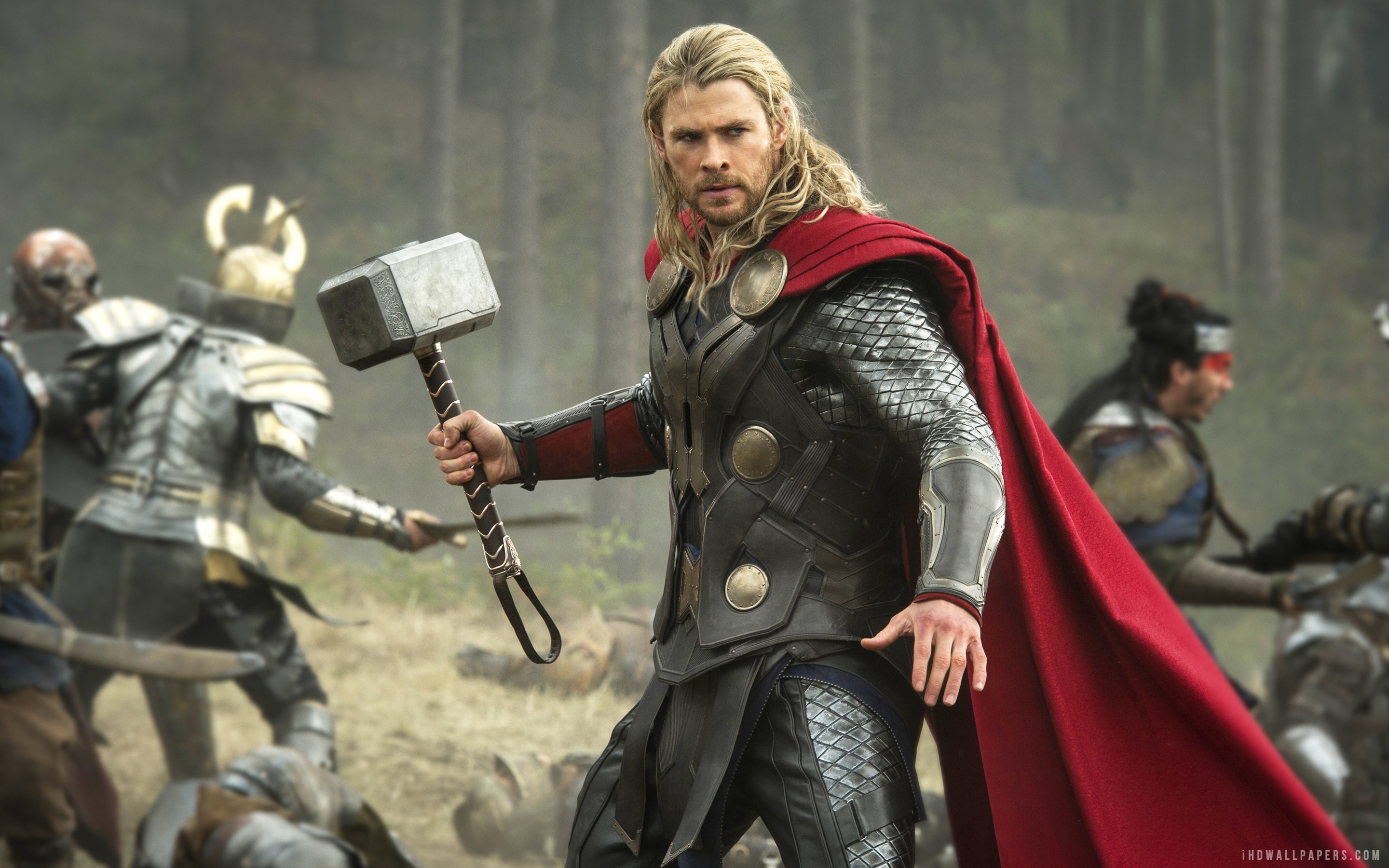
Again, the plot doesn’t make much sense, and it’s, bizarrely, much more serious than the first one,but there’s a lot to like in Iron Man 2. While the humour is significantly missed, and the sequel-goes-darker thing is so painfully trite, but Stark’s perpetual crisis of character is at its most poignant here, as he directly confronts his demons from the first film, and it hits home. There’s also a real fraught tension, that there’s stakes on the line here, that Mickey Rourke’s Vanko might actually kill our loveable narcissist. Above all else, it was the first MCU film to seriously suggest the potential ubiquity of this cosmos, with its Black Widow appearance and Avengers initiative intimations.


9. Thor

Branagh’s decision to play up the source material’s inescapable camp – displacing the Norse God and all his overbearing melodrama in a kitchen-sink, naturalistic setting – was intelligent. Not only does it pay off as very funny, but it also paints the concept’s fundamental ridiculousness as congruent. It’s strangely small, with most of the Earth scenes taking place in what is essentially a desert, and there sadly never exists the suspense which compels some of the other franchise exports, but the Asgardian family soap-opera is scintillating, with Hiddlestone’s Loki obviously stealing the show both comically and dramatically, and it all feels like it collectively works, which from an objective standpoint is remarkable. Above all else, it’s just enormous fun.


8. Antman

There are a lot parallels between Thor and Antman; the most blatant being their conceptual absurdity, but also in their slightness. They feel removed from the colossal warfare of their (particularly phase 2) equivalents, to the point where they feel like completely separate genres. While Thor felt like post-modern Shakespeare, Antman is ostensibly a heist-comedy. Like Thor, the fact it pulls off the whole tiny superhero ludicrousness is laudable, thanks largely to its self-awareness, but also to Paul Rudd’s gritty everyman quality. His character is manifestly dissimilar to his Greek God-like colleagues, but his weariness and understated comic value transform him into one of the universe’s most charismatic protagonists. While very funny, perhaps Antman’s greatest, and most unexpected, virtue is its emotional heft, as both father-daughter dynamics are sincerely moving.


7. Iron Man 3

Iron Man 3 isn’t perfect. I think its third act is utterly abysmal for instance; from that twist onwards, it basically goes spiralling downhill. But until that point, it’s Marvel at its finest. It felt like it a continuation of The Avengers (where Marvel finally nailed the synergy of comedy, drama and action) with Stark returning to his barbed one-liners and screwball face-pulls of the first film, while reinforcing the sense of deteriorating psychosis and manic tension of the second, while providing some incredible sequences. The terrorism subtext was immensely unsettling, and there’s a real sense of dread and black humour saturating every frame. It’s the darkest MCU film, and, having spent four films investing in this fascinating character, it’s often breathtaking in its ambition. It’s just a real shame about the last half hour. Which is dreadful.


6. Captain America: The First Avenger

On first viewing I was fairly underwhelmed by The First Avenger. But on second viewing I realised that it’s not a superhero film at all. It’s an entertaining man-on-a-mission film with some, and really unanticipated, thematic weight. Captain America is, from a superficial perspective, the most boring Avenger. He appears to be a two-dimensional symbol of American expansionism and jingoism, but Chris Evans injects proper substance into him (as well proper steroids). There’s so much heart to Steve that he’s indefatigably charming, as is Hugo Weaving’s oldschool Red Skull. In fact the whole film feels an endearing blend of old Hollywood action flicks in the vein of The Great Escape with its lighthearted machismo, and the modern blockbuster with its emphasis on bombast. There’s also an authentic confrontation with the horrors of war here that perfectly contrasts with Evans’s exuberant naivety. It’s modest, but surprisingly powerful. Also, the best ending of the franchise. By far.


5. Avengers: Age of Ultron

I loved Age of Ultron. I agree it is flawed; it is overstuffed with too many subplots and characters to the point where actually significant idiosyncratic narratives are almost redundant – Thor’s especially – but the fact that Whedon managed to balance everything without it completely collapsing in on itself is a staggering achievement. On a purely structural basis, it’s one of the biggest films ever made, but Whedon gives each of the (many, many) characters space to breath and develop. The main plot is actually interesting (the insipid the-greatest-monster-is-man conjecture notwithstanding) Furthermore, I think that Loki (obviously) aside, Spader’s Ultron is Marvel’s best villain; it’s believably sociopathic yet magnetic, complex and driven. Ultron’s also, by some distance, the MCU film which provides the greatest sense of mortal anxiety. Whedon foreshadows someone’s death in spades throughout, so that the finale is authentically nail-biting, not to mention jaw-droppingly outstanding. Try biting your nails with your jaw dropped. It’s hard. Not as operationally cohesive as The Avengers, but still immensely rewarding. I’m just happy to see these characters together. To steal from critic Helen O’Hara, I’d happily watch a 2 hour film of them hosting a dinner party.


4. Iron Man

The shot of adrenaline which Superheroes needed, Iron Man remains one of the MCU’s most original (for the time) and entertaining outputs, and probably remains its most interesting. Yes, Iron Man should be applauded for being hilarious, vibrantly fresh, and for establishing the pseudo-realistic tone which has served the MCU so successfully. But it should also be applauded for being a legitimately great character study. Tony Stark’s journey from conceited playboy to altruistic-but-troubled antihero is nuanced, convincing and affecting. Much of that is inevitably down to Robert Downey Jr’s wonderful portrayal of Stark, this being the role which catapulted him back into the cultural consciousness. There is a lot going on behind the scenes in Iron Man, the morality of Westernising the Middle-East, but there’s so much colour on screen you really don’t have to care.

3. Captain America: Winter Soldier

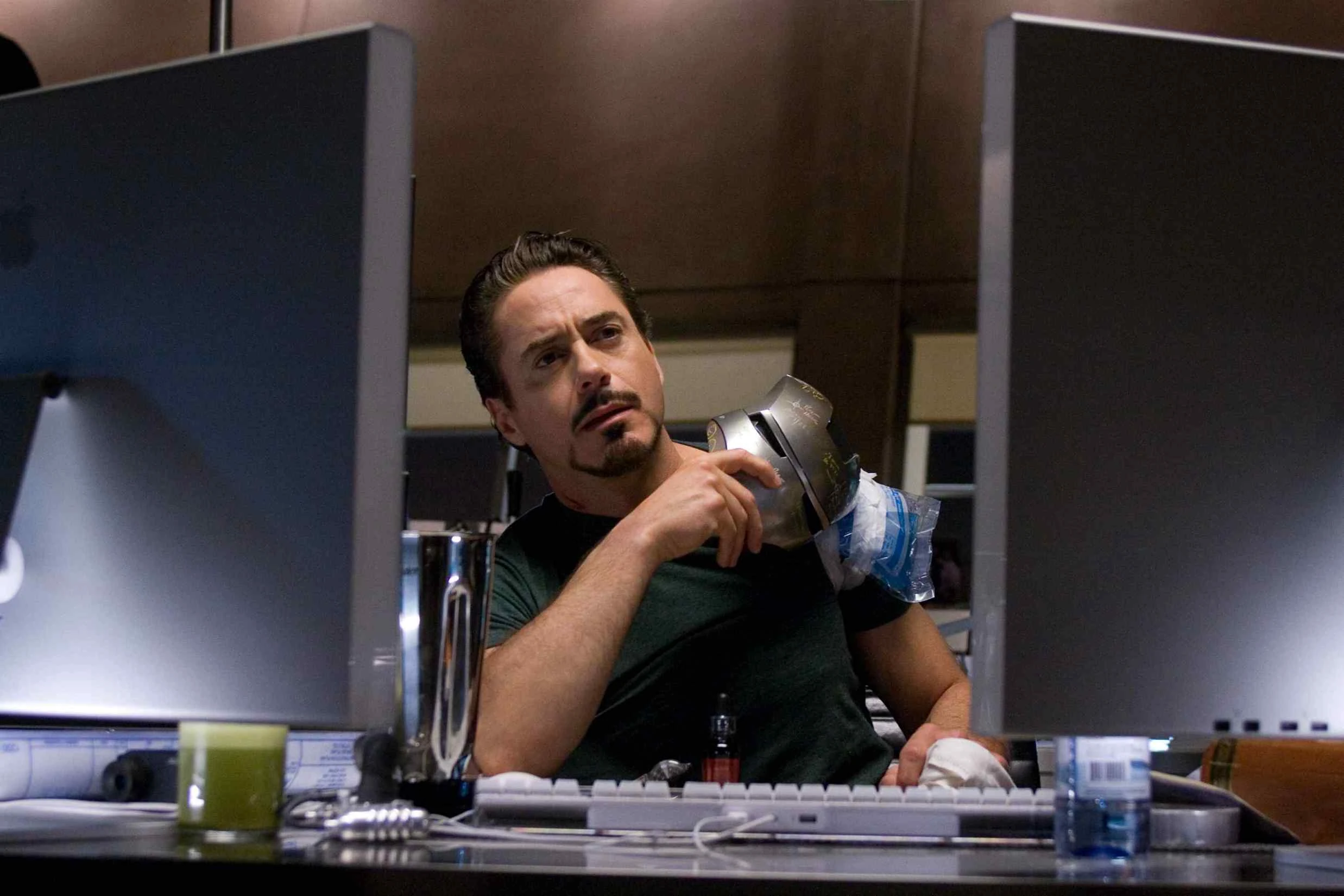
Winter Soldier feel more like a Bourne film than an MCU film, with its emphasis on political intrigue and elaborate treacheries, and brutal, claustrophobic action, but it works bloody well. In a way it cements Cap’s aesthetic as the most realistic of the individual threads, with its emphasis on the difficulty of nationalism and corporate shadiness displacing aliens and crippling self-consciousness. Cap’s still Private Patriot and Major Morality, but this is turned into his own compelling character flaw. He contrasts with the nation he supposedly represents, one motivated by Imperialistic tenacity and security paranoia. The fight scenes are all debilitating, awe-inspiring shaky-cam, intensifying the sense of momentum and importance to the mission, while Cap's quieter moments with Black Widow and Falcon are honestly very sweet. It could have been even further up the list if it had stuck to its guns as a Cold War-esque conspiracy thriller, rather than regressing into the deja vu sky-attack showdown. Winter Soldier is by turns exhilarating, bravely thought-provoking, and occasionally heartfelt. The first truly great, five-star standalone MCU film.


2. Guardians of the Galaxy

I saw somewhere call Guardians of the Galaxy analogous to the incalculably iconic escapist adventure that Star Wars and Lord of the Rings was to previous generations, and I think I agree. The central strength of Guardians is that, both with myself and with most people discuss it with, it’s practically impossible to choose a favourite character. Whether it’s Starlord’s charisma, Gamora’s no-nonsenseness, Rocket’s snarkiness,  Groot’s one-liner (see what I did there), or Drax’s wonderful, wonderful literalism, these are a group of rag-tag miscreants you actually love and care about. The action scenes are clever and thrilling, the world itself is well-realised, it’s at times deeply heart-breaking, and it’s definitively the funniest MCU film. And, of course, what a soundtrack. There’s nothing really below the surface but who cares when you’re spending your two hours swamped in delight and whimsy and excitement and charm. Simply one of the most purely enjoyable blockbusters ever made.


1    1. The Avengers


I wasn’t really into the MCU before The Avengers came out in 2012, and even then I went to see it because I creepily lionise Joss Whedon more than anything else. It honestly blew me away. It was profoundly entertaining. Whether it was the gargantuan set-pieces, or the intricate subtleties to the character dynamics, it was cinematic joy. It felt both huge in scope and ambition, yet retained the decisive attention to detail in its character and plot development. There was a calculated sense of urgency and tension, but also an unbridled appreciation for fun. Nowhere is this better embodied than in the two-scene intercut of Captain America desperately defending a host of women and children, while the Hulk tosses about a Norse god like a ragdoll. It flicked between grandstanding awe and magical entertainment with a momentary edit. The Avengers tied everything together and completely immersed you in its world. It was action, comedy and drama perfected. It finished Phase One, and announced with an emphatic roar that the MCU will be one of the major historical landmarks of modern cinema. For me, it stands up there with Jaws, Back to the Future, The Dark Knight, Jurassic Park, Aliens and Raiders of the Lost Ark, as one of the truly brilliant Summer Blockbusters.

Tuesday, 7 July 2015

Best Albums & Songs 2015 (So Far)

Albums

15.  Payola – Desaparecidos

Blistering, fuming politic-punk pulled off with gleeful self-awareness and thrilling choruses.


14. White Men are Black Men Too - Young Fathers

These Edinburgh, globally inspired Hip-Hop nerds returned with their second LP; cleaner, more refined, but also their most ambitious work to date. 


13. I Love You Honeybear - Father John Misty

Easily, and wrongly, discarded as Hipster-Folk, this is intelligently written, beautifully executed Country with a great deal to say.


12. Jenny Death - Death Grips

The most insane and experimental Hip-Hop group going seamlessly conduct their brand-marked visceral production with the roars of Hardcore and Post-Punk guitars.


11. Wildheart - Miguel

R&B's most endearing sexfiend concocts a Pop classic effusing 80s guitars, mellifluous synths and typically gorgeous vocals.


10. Sprinter - Torres

The first of a surprising number of female-led Indie-Rock records on this list, Sprinter evinced admirably aggressive Rock bangers supplemented by a claying, heart-felt vulnerability.


 9. In Colour - Jamie xx

The Deep-House dynamo's debut LP is splendid, bubbling over with unifying Summer anthems and wonderfully chilled Garage.


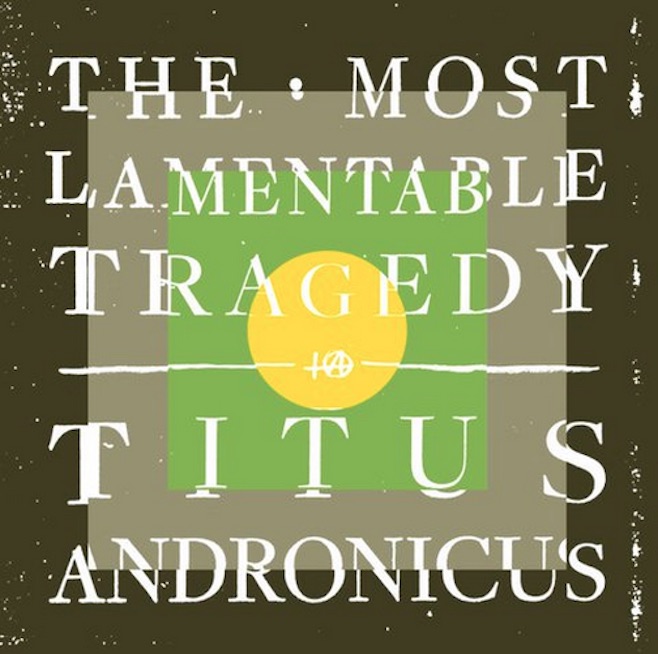
8. The Most Lamentable Tragedy - Titus Andronicus

A '28 song Rock opera' sounds pitifully pretentious, and at times Most Lamentable titters on the edge of kitsch, but when it works it makes you want to punch the air and scream 'FUCK YEAH' like the biggest wanker imaginable.


7. My Love is Cool - Wolf Alice

Drenched in a concoction of melancholic 90s Alternative sensibilities and an alarmingly life-affirming sentiment, My Love is Cool is a simply wonderful contradiction to experience.


6. Sometimes I Sit and Think, and Sometimes I Just Sit - Courtney Barnett

Shifting herself up a gear, Barnett swaps stoner Dream-Pop for scintillating Folk-Punk and, well, it's really bloody good.


5. Summertime 06 - Vince Staples

Another of the 'debut album' crowd, Staple's impeccable flow and sultry beats are only the foundation of an absolutely furious, terrifyingly pertinent indictment of US policing.


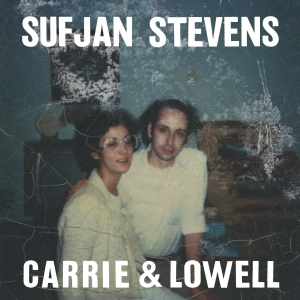
4. Carrie & Lowell - Sufjan Stevens

Sufjan's dedication to his eponymous parents is lathered in nostalgia, regret, longing, fondness, pain, and it is achingly beautiful.


3. After - Lady Lamb the Beekeeper

An album firing on all cylinders, confronting love both requited and unrequited, heartbreak, socio-economics, and family feuds; it is a tangible, compelling life captured in catchy choruses and pleasing melodies.


2. Painted Shut - Hop Along

This is Indie Rock at its most earnest, with lo-fi guitars, gloriously flawed vocals, and a breathtaking sincerity equalled by an incredible songwriting talent.


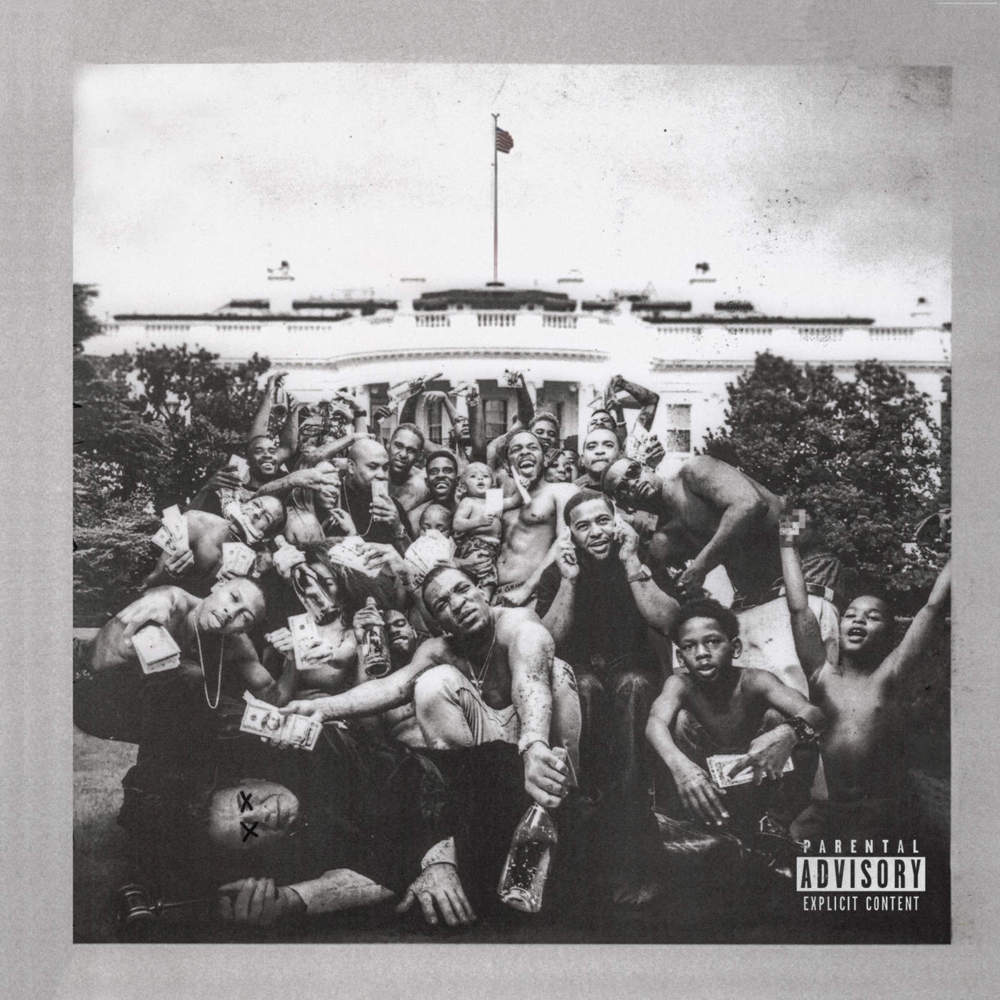
1. To Pimp a Butterfly - Kendrick Lamar

It was never going to be anything else. Nothing comes close. This year, or pretty much any other year. My favourite Hip-Hop album, and one of the greatest albums of all-time.


Songs

30. Here - Alessia

29. Boxing Timelines - The Early November


28. Noah - Panda Bear


27. Air - Waxahatchee


26. Lisbon - Wolf Alice


25. Energy - Drake


24. Loud Places - Jamie xx


23. All Day - Kanye West


22. Waitress - Hop Along


21. Can't Keep Checking My Phone - Unknown Mortal Orchestra


20.  Te Amo Camila Vallejo – Desaparecidos


19. Seesaw - Jamie xx


18. Cops Don't Care Pt. II - Fred Thomas


17. Sprinter - Torres


16. Coffee - Miguel


15. Go - The Chemical Brothers


14. Beyond Alive - Death Grips


13. Bored in the USA - Father John Misty


12. Dimed Out - Titus Andronicus


11. Should Have Known Better - Sufjan Stevens


10. Shame - Young Fathers


9. Milk Duds - Lady Lamb the Beekeeper


8. Norf Norf - Vince Staples


7. Realiti - Grimes


6. Silk - Wolf Alice


5. Wipe That Shit-Eating Grin Off Your Punchable Face - The Smith Street Band


4. Well Dressed - Hop Along


3. King Kunta - Kendrick Lamar


2. Pedestrian at Best - Courtney Barnett


1. The Blacker the Berry - Kendrick Lamar

Sunday, 24 May 2015

My 100 Favourite Films of All-Time #100-91

Well, I've finished my undergraduate degree. What better way to celebrate it than doing what I should have done a long while ago; compiling an ordered list of my favourite films, and justifying their position. A few honourable mentions first; the spectacular achievements of Boyhood and 12 Years a Slave narrowly missed out, as did John Hughes's immaculate Ferris Bueller's Day Off. Unfortunately, the effortlessly cool French Noir Rififi had to be substituted, and Charlie Chaplin's lovely City Lights narrowly missed out on a spot. For the rest, well, enjoy!

100. It’s a Wonderful Life – Frank Capra

Every December 23rd the Devlin family make the twenty-minute pilgrimage to the Glasgow Film Theatre to watch Frank Capra’s beloved classic, and each year I discover some minute detail which tacitly evolves my love for this remarkable film; that Mr. Potter’s steward chips into the Bailey fund at the end; why Clarence’s favourite novel Adventures of Tom Sawyer symbolises Capra’s homage to small-town values; or just how perfectly Stewart and Reed capture the anxiety, frustration and mad love that boils over in the scene where they share the telephone talking to Sam Wainwright. It’s a thought-provoking critique of capitalism. While George’s incessant dedication to his family and community above his self-interest drives him suicidal it also redeems him, and the closing sentiment that ‘No man is a failure who has friends’ is spellbinding. With a legacy justifiably imprinted upon pop culture, it is deeply funny, populated with loveable secondary characters, fetchingly of its time, and purports one of the most achingly inspirational endings in cinematic history.


99. Grave of the Fireflies – Isao Takahata

Grave of the Fireflies also possesses a famous ending, but it’s very much the inverse of It’s a Wonderful Life. Putting it simply, it’s utterly devastating, not only one of the most mature children’s films I’ve seen, but one of the most mature war films. The young teenage boy Seita looks after his infant sister Setsuko after their mother dies from firebombing burns. Following a stint being cared for by their superficial Aunt, they live in the wilderness of a local cave. The film engages with Japan’s domestic war effort from the perspective of a small child, and is perforated with images and ideas of simultaneous excitement and adventure, and confusion and fear. Every line of dialogue, every framing decision, every pristinely animated object, they amalgamate into a body greater than the sum of its parts, and they all effectually construct the universe both inside and outside the narrative. Discordantly gorgeous, the moment when the children capture dozens of fireflies to light their cave is magnificent, but the lasting, awful impression is of Setsuko making a mass grave for the fireflies following their explosively transient existence ‘just like with mummy.’ When the credits roll, you sit there paralysed by humanity’s evident inhumanity.


98. Jurassic Park – Steven Spielberg

You’d probably guess this’ll not be the last Spielberg on the list, and you’d be correct. Having made Schindler’s List in the same year (1993), the early 90s represented one of the Brat Pack’s finest at his apex. The science is obviously hogwash, but Spielberg’s peerless grasp of character, setting and plot development builds a completely believable world where anything seems plausible. It’s pure storytelling wonder, brimming with enough humour, warmth, tension, and intelligence to fuel a dozen modern blockbusters. It’s also categorical evidence that practical effects will always be better than CGI; I mean, just watch the raptor kitchen scene again. Absolutely flawless execution from both the effects team and Spielberg. The film itself is built on ceaselessly iconic moments; the first sighting of that Brontosaurus, the shaking glass of water, and the T-Rex’s final roar as it dismantled the skeleton of its brethren in the lobby, concurrently embodying Jurassic Park’s two central themes; the omnipotence of nature, and the danger of man’s tampering with creation. It could be considered libellous that I’m more excited by Jurassic World than The Force Awakens out of this year’s blockbuster extravaganza, but my eight-year old self was always more of a dinosaur geek than a Sci-fi geek.


97. Toy Story 3 – Lee Unkrich

When the pupil became the master, when Lee Unkrich emulated, and bettered, John Lasseter. The first Toy Story was more or less my childhood; I watched it every three or four days when I five. It’s obviously a stalwart example of what computer animation can achieve, and still visually holds up to this day, but it was the imaginative, hilarious screenplay and tender approach to the childish alliance between jealousy and friendship which truly drove Pixar’s debut to infinity and beyond. Fifteen years later, Andy packed up and left for college, leaving his toys to a girl he knew for a fact would love them as much as he had. Toy Story 3 is about growing up, letting go of the ones you love for the better, and moving on. Mature, difficult themes handled immaculately. By adopting a prison break format, thereby avoiding the repetition of the first two, Unkrich kept things fresh, interesting, and very funny. Visually splendid, immaculate jokes which epitomised Pixar’s peerless balance between kid and adult laughs, unreservedly moving, and even fraughtly tense (Christ, that incinerator scene), it was not only the best family film of 2010, but possibly the best blockbuster and comedy too. The perfect end to a magnificent trilogy (as far as I’m concerned, Toy Story 4 does not, and never will, exist). Toy Story 3 also, sadly, represented the conclusion to Pixar’s Golden Age, where after the euphoric burst of the late noughties they ran out of steam and crashed to a halt. Forgive my metaphor mixing. Hopefully, and if the Cannes reaction is anything to go by it will, this year’s Inside Out marks an ardent return to form.


96. Whiplash – Damien Chezelle

There’s a moment in Whiplash when I realised I was totally enamoured with this strange, captivating film. When Andrew breaks up with Nicole so that he can focus exclusively on his drumming, I felt as bewildered and furious as she was. Then I remembered that previously I internally cheered Andrew’s outburst at his self-involved cousins over a family dinner, and sat completely transfixed and horrified as JK Simmons evinced his totalitarian mentorship with the back of his hand. I was immersed in this story from that opening zoom-in shot. Folk have understandably been reacting hysterically to Simmons’s performance; a collision of hot-headed bravura and clinical coldness, he is a charismatic and malevolent villain. However, for me, the true star equates as either Miles Teller or Chezelle himself. Teller, a genuinely talented jazz drummer, personifies Andrew’s anti-heroism. Andrew is selfish, arrogant, and eminently unlikable, but he is possessed with such admirable drive and passion that he transcends his obnoxiousness. Chezelle frames with rapid-fire, chilling close-ups and extended cuts of furious action as scattered and mesmerising as the music itself. While plot development is minimalistic and relies on suggestion, it works, underscoring the dynamic between Simmons and Teller and their mutual obsessive ambition while effectively contextualising their motivation and background. The finale is as thrilling as any Bourne chase, and as glorious as any Pacino speech. An authentically exhilarating experience.


95. Casablanca – Michael Curtiz

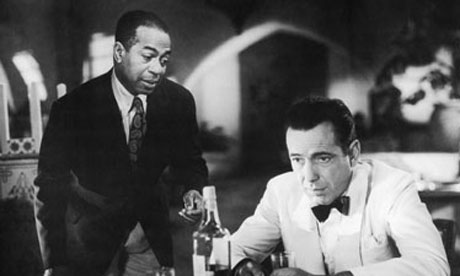
A wonderful slice of escapism pie, it converges on that old Hollywood paradigm; should a man choose the woman, or The Greater Good? This is the decision the angsty, invariably Noir-y Humphrey Bogart must make, as he sits drooped in his gin-joint bar-stool; his forgotten love, Ingrid Bergman, or her resistance leader husband, all set in the bustling conglomeration of cultures that is Casablanca. Curtiz remains understated, relying on the magnificent script from Epstein brothers, corroborated by the chemistry of the leads, to truly sell this story. Moral conundrums aside, there are constant flourishes of filmic gold, such as Sam the pianist and his tender relationship with Bergman’s Ilsa, the surprisingly sophisticated political subplot, and of course Bogart’s triumphant sacrifice. It’s an honour to lose yourself in this Noir-War-Romance, as it exemplifies everything great about Hollywood’s Golden Age. It’s just lovely, from Peter Lorre’s creepy comic relief to that perfectly bittersweet ending.


94. Talk to Her – Pedro Almodovar

One of my most beloved European directors, Talk to Her pips the likes of Bad Education and All About my Mother as my favourite from his filmography. A simply beautiful exploration of humanity and our pretences over problems of gender identity, as well as confronting issues of intimacy, loneliness and friendship. Marco and Benigno’s esoteric relationship develops via two women they care for surviving in comas beside each other. Narrated via flashbacks, Almodovar organically shapes our impressions of these two men, alternating between compassion, distress, and disgust. It’s morally difficult, disturbing even, but this is what it makes it all the more compelling. No one creates characters like Almodovar, people completely idiosyncratic and superficially problematic to relate to, but who progressively expose our own quirks and oddities and reveal them to be essential to the fabric of being a functional human being. Life is strange and pointless, and people are strange and pointless, but love, even in its most corrupted form, truly overcomes everything; language, consciousness, even mortality.


93. Crash – David Cronenberg

Famous for his weird, gripping body horrors, my favourite Cronenberg is just as corporeal, but rooted in a determinedly psychological realm of horror. His adaptation of JG Ballard’s nefarious novel spans the world of auto-erotica, and proved about as divisive among both critics and the public as conceivably possible. James’s introduction into paraphilia begins with a car crash, when he witnesses Helen’s exposed breast. He soon begins an affair with Helen and becomes involved with Elias Koteas’s Vaughn, an enigmatic figure who posits that experiencing a car crash signifies a "fertilizing rather than a destructive event, mediating the sexuality of those who have died with an intensity that's impossible in any other form." We are utterly absorbed by James’s journey into the dark recesses of sexual pathology, though Cronenberg’s detached camerawork sustains the viewer’s position as one of dispassionate voyeurism rather than one claiming either revulsion or attraction. The only pornography here is that of society’s resolute conservatism. Provocative, enthralling, and endlessly fascinating, Crash is a peculiar masterpiece.


92. Three Colours Blue – Krzysztof Kieslowski

Blue is the first of Kieslowski’s wondrous Three Colours trilogy, a series based on the French Revolutionary precepts of liberty, equality, and fraternity. Blue presents the idea of liberty, or more specifically, emotional liberty. Julie’s husband and child are killed in a car crash (I appreciate the tragic irony of placing this just ahead of Cronenberg’s) and so she recedes into self-imposed solitude; without familial ties and responsibilities, she equally feels no obligation to society. In her process of disassociation she tries to retain some semblance of her daughter in blue beads, and eradicate her husband’s lingering legacy, a classical music composition inspired by the sense of European unity stimulated by the Berlin Wall’s collapse. It’s an agonising expose of grief and its concomitant nihilistic resignation, with Kieslowski’s successfully congruent fusion of naturalistic performance and artsy symbolism depicting a graceful, heartbreaking – not quite self-destructive, not quite redemptive – continuation, of just pushing on and moving on.


91. On the Waterfront – Elia Kazan


A Streetcar Named Desire made him a star, but Brando’s magnum opus is not The Godfather, not The Wild One, and not Apocalypse Now. It’s On the Waterfront. The Wire’s Season Two is eerily redolent of this chronicle of dockworker union corruption, and Kazan’s piece is just as erudite, scathing, and powerful as David Simon’s televisual Great American Novel. Brando stars as the longshoremen Terry Malloy, a once-promising boxer instructed to throw a fight by his mob-affiliated brother. Throughout Terry confronts demons, both past and present, and faces a Hamlet-esque dichotomy of inaction and inconsequence. Brando contorts and twists himself physically and – visibly – emotionally, so immersed in the role of his tortured hero that he precludes any theory of ‘acting’. Dealing with subjects of morality, inequality, masculinity, power, and justice, Kazan’s greatest success is how impeccably these hefty topics synthesise, constructing a blue-collar world quietly condemnatory of both the inherent violence of men, and the capitalistic structure which provides the environment for vindictive ambition and organised crime to thrive. A truly great, truly American film.


Wednesday, 6 May 2015

The General Election 2015: My Endorsement

Stop letting institutional and celebrity endorsements arbitrate your views and fashion your own political identity from independent research and consideration you rascal.


Wednesday, 22 April 2015

My 30 Favourite Film Directors #30-21

To stem off the mundanity of revision/my final ever summative essay, I've decided to list my favourite 30 film directors and write a bit about each of them. Inevitably, while I scramble for permanent employment in the Summer I'll write a solipsistic list of my favourite films, so in a way, this is a really, really terrible prologue to that. Enjoy!

30.   Michael Mann

It was a difficult decision, this coveted 30th position. It was a duel between two masters of the contemporary blockbuster who consolidate sophisticated action-toting flair with grand ideas and social pertinence; Michael Mann, and Chris Nolan. Unfortunately for Nolan, his inconsistency since The Dark Knight is ultimately his demise; he compromises coherence and depth for admirable, if not infrequently insipid, conceptual ambition. Michael Mann is not without his stinkers, 2006’s Miami Vice and 2015’s Blackhat for instance, but over the past thirty years Mann has unfailingly proved that he’s one of the best action directors working. Whether it’s the slow-burning, fraughtly tense psychological thrillers spearheaded by the underappreciated Manhunter – it is often forgotten that Mann was the pioneer in bringing everyone’s favourite cannibal, Hannibal Lecter, to screen – the classic adventure yarn of Last of the Mohicans, the intricately woven biopic Ali, or the cosmopolitan Collateral, Mann resolutely offers entertainment compelled by interesting expositions of masculinity, disillusionment, and modernity. Then you have Heat, which I consider the third greatest action film of all-time. When you precipitate acting monoliths Robert de Niro and Al Pacino to face off against one another, and have direction remain your film’s strongest facet, then you know you’re doing well.

Must Watches: Heat, Last of the Mohicans, The Insider


                29. Park Chan Wook

Is there a thriller this century as iconically cultish as Oldboy? The middle part of Park’s infamous Revenge trilogy is a pulp masterpiece, striking a difficult balance between visceral brutality and narrative intrigue, proving as capably enthralling as it is shocking, with a twist as outrageous as genre classics Se7en and The Usual Suspects. It’s probably his best film, but maybe not his most perfect. That honour goes to Lady Vengeance, the finale of his vicious triumvirate, which inverted the serial killer/prey dynamic with amoral consequences. While not as furiously paced or as immediately gut-wrenching as Oldboy, it’s much richer. It’s morally complicated to the extent that it subverts audience’s expectations of cinematic violence; we bay for the blood of the killer halfway through, until Lady Vengeance evinces that this partisanship is reductive, indebted to CSI and Criminal Minds based overtness. Ironically then, it is arguably Lady Vengeance rather than Oldboy that is paradigmatic of Park’s filmography. From the Korean civil-war piece Joint Security Area to his delightfully Hitchcockian first English-language film Stoker, he is incessantly gripping, but equally as provocative with his ideas.

Must Watches: Oldboy, Lady Vengeance, Stoker


                28. Wim Wenders

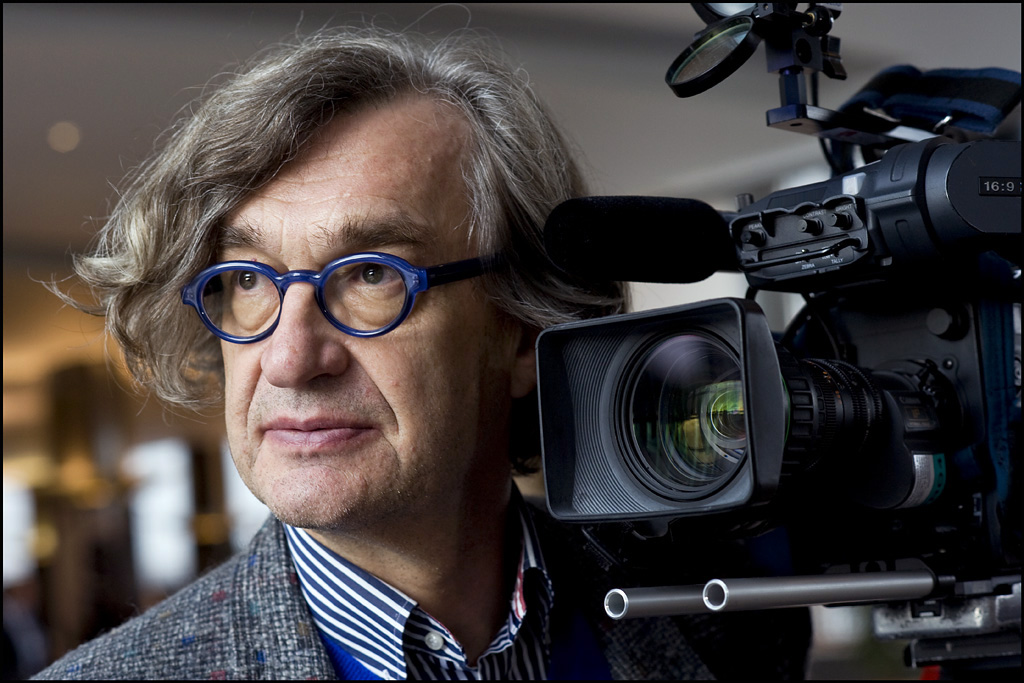
A man eminently possessed by the search for the human soul represents it in cinema better than almost anyone. Born in Dusseldorf in 1945, he grew up in a country ejected of a cohesive character, and so self-identified with the mythos of 50s and 60s American culture. His filmography evokes an utterly unique personality of European and American ideological conflation – literally, in the case of the incredible The American Friend – and, symbolic of his pre-globalisation dogma, he finds the human soul in compassion for your proverbial neighbour. Forgive my language; Wenders’s work is by no means devoutly religious, but it is inescapably spiritual. They often deal with friendship, nostalgia, love, beauty, community; the heart of the city as the people ideal (most of his work is metropolitan), but he’s at his finest when he considers the implications of loneliness, depression, and death. From these black holes of grief Wenders flowers gloriously understated pictures of redemption, agony and kindness so achingly moving you’ll remain transfixed in thought long through the end credits. One of the great humanitarians.

Must Watches: The American Friend, Paris Texas, Wings of Desire


27. Andrei Tarkovsky

The enigmatic Russian may be divisive; his lingering static images and extended tracking shots of inaction, compounded by his heavy emphasis on environmental symbolism and body language exposition, could be considered a tad precocious for some. If you have the patience however, Tarkovsky reveals one of the most rewarding filmographies of any director. Andrei Rublev, for instance, is one of the greatest historical epics I’ve ever seen, a sometimes disturbing, always fascinating account of Renaissance Russia and the relationship between art and beauty in a nation immutably consumed by chaos and destruction. Tarkovsky’s variety is enormously impressive, whether it’s the intimate war-based Ivan’s Childhood, his poignant debut; the sinister Stalker and its implications of apocalyptic isolation; or the magnificently genre-defying Solaris, an amalgamation of Sci-Fi Horror and Romantic drama which unsettles and affects on both an emotional and psychological level. His films are often provocative and distressing, purveying a national and personal dysfunction redolent of our most anxious trepidations over the human condition, but they are enchanting, compelling and necessary; and in their own perversely manner, absolutely gorgeous.

Must Watches: Andrei Rublev, Solaris, The Sacrifice


                26. Ridley Scott

He’s arguably made only four or five great films over forty years, but Scott establishes himself firmly in this list predicated on his blossoming my unhealthy obsession with all things cinema. I had just turned fourteen when I first watched Alien, and it absolutely blew my mind. I had never been as emotionally stimulated by any artform before, and rarely since; it was so palpably, inconceivably, dizzyingly tense, and I just couldn’t bear it. It was incredible. The next day I watched Blade Runner and experienced a corresponding epiphany; it was more immersive and more absorbing than anything I’d ever watched before. Periodically, Ridley Scott became my favourite person ever. Then I watched films like Robin Hood, Matchstick Men and 1492 and that precept sort of fell apart. But when Scott succeeds, he really, really succeeds. Excluding Alien and Blade Runner, which remain two of my all-time favourite films, Gladiator and Thelma and Louise are triumphs of blockbuster escapism, while Black Hawk Down remains an undervalued stance on an often misrepresented warfront. Then there’s the divisive Kingdom of Heaven. Rightfully vilified upon its theatrical release, its Director’s Cut implants forty minutes of character development and plot exposition which bizarrely, but fortuitously, somehow transfigures the film into the best historical epic of the decade, comprising the histrionics of Medieval politics and conflict years before Game of Thrones. Scott masterly, enticingly invites you to lose yourself in another world.

Must Watches: Alien, Blade Runner, Kingdom of Heaven (Director’s Cut)


                25. Bong Joon Ho

Park Chan Wook might justly epitomise the astonishing emergence of New-Wave Korean cinema, but, in my opinion, he’s not its finest director. Rather, I believe that it is Bong Joon Ho. Now, I must confess that this is a bit of an artificial choice; at the time of writing Bong has only released four films, which, debatably, compromises his claim to being a favourite director. Saying that, all four films are brilliant. Memories of Murder nearly pips Se7en as the best serial killer film I’ve ever seen, a provincial thriller with sweeping political subtext, riddled with horrific flashes of violence and surprisingly frequent doses of comedy. The Host is the best monster movie I’ve seen, with scintillating and terrifying action sequences, but again it’s the political intrigue, humour, and distinctive family paradigm which truly elevates it. Mother is ostensibly a Korean Twin Peaks, full of small town mystery and tacit prejudices. His greatest film, and first in the English language, forefronts the politics he always subtly embedded; the dystopian Snowpiercer, a fearless exploration of human behaviour and its relationship with government. Not only one of the most thought-provoking documentaries of philosophy I’ve seen in film, but concomitantly one of the most entertaining Sci-Fi thrillers in years if not decades. Noone makes cinema as analogously interesting and as enjoyable as Bong.

Must Watches: Memories of Murder, Snowpiercer, The Host


                24. David Cronenberg

Cronenberg’s preoccupation with body horror and all its gleefully disgusting permutations and supposed allegorical signifiers is well documented, and indeed Sci-Fi terrors such as The Fly, Scanners and especially Videodrome are great in their own demented sensibility. But, for me, it’s the unfathomable depths of the human psyche which Cronenberg plunders and mutilates which appeals. The disorienting fragmentation of Spider and Naked Lunch, the meta-cinematic agitation of family, love and violence in A History of Violence and Eastern Promises, and the sinister union of death and sex in the likes of the literally Freudian A Dangerous Method and his masterpiece Crash (no, not the Crash which is the most undeserved Best Picture winner in Oscar history, the one about auto-erotica). It’s not only his subject matter which is so extravagantly esoteric, but his direction; logically, if you’re dealing with psychosomatics and humanity’s darkest primal desires, you’ll need appropriate framing. Cronenberg’s camera angles itself from uncomfortably dissimilar positions, and with editing stoically elusive the narrative is often as effectively perplexing as his content, though importantly not confusing. He’s bloody weird, and he’s bloody good.

Must Watches: Crash, A History of Violence, Dead Ringers


                23. Sidney Lumet

Hidden behind the bravura of the 70s Brat Pack characterised by Spielberg, Scorsese, Lucas and Coppola, there lies Sidney Lumet; one of the most prolific and prescient filmmakers of his generation. From 1957’s screen-based Great American Novel 12 Angry Men to his final exertion Before the Devil Knows You’re Dead in 2007, Lumet literally chronicled a half-century of cinematic milestones. If I may employ the latter as a segway, Lumet was entirely idiosyncratic when dealing with crime films. The likes of Before the Devil and Serpico confront the intrinsic greed of the American Dream, where the ambiguity of what is morally right and what is lawfully proper clashes to dazzling effect. His legal films are some of the genre’s most compelling: 12 Angry Men, The Hill, and The Verdict not only venerate the irrepressible pursuit of justice in the American legal system, but still critique vehemently its structural flaws. He lampoons media and fame in the excellent Dog Day Afternoon, and Network, my favourite Lumet. Network is my darling satire, combining stomach-aching hilarity and powerfully remorseless criticism of the artifice of contemporary journalism. These works are pertinent, harrowing, and searingly funny; but I feel one of his most untouched works is his most prototypical, his adaptation of Agatha Christie’s Murder on the Orient Express. It’s not only mesmerizingly immersive and clairvoyant, but it’s just impeccable. The acting, writing, direction were all sound, they just feel complete. His filmography, above everything else, is immaculate.

Must Watches: Network, 12 Angry Men, The Verdict


                22. Wong Kar Wai

At my most introspectively narcissistic, I like to think of myself as an incongruent fusion of radical romantic and healthy cynic. As a result of this unnecessary, arguably pitiful self-assessment, some of my favourite films are romances; but romances which are understated, naturalistic and perforated with tragedy. In this manner, Wong Kar Wai is my platonic soulmate. Whether it’s the curiously intersected, pan-temporal narratives of 2046, the wonderfully abrupt ending of Chungking Express’s, or the pervasive search for longing in a terribly turbulent universe in Days of Being Wild, Wong’s films are layered to the brim with jaw-dropping visuals, completely relatable characters, and deeply heartfelt, deeply human significance. Then there’s In The Mood For Love, one of the greatest romances since Brief Encounter; which seamlessly combines quixotic fantasy and devastating unsentimentality. Love is intimated in a fleeting glance, a transient impression of human contact, and above all else, in a discordantly Westernised soundtrack choice. Wong understands that love can sprout in the greyest garden of isolation, and it is beautiful.

Must Watches: In the Mood for Love, Chungking Express, Happy Together


                21. David Lynch

Forgetting the atrocities that are Dune and Wild at Heart, David lynch has had some career. Whether it’s making surprisingly conventional tearjerkers in the form of The Elephant Man, appalling conservative film critics with Dennis Hopper’s notorious sadomasochistic sex scene with Isabella Rossellini, or permanently changing the landscape of TV with his opus Twin Peaks, Lynch has made quite an impact. Bristling with obdurate symbolism, bizarre yet instantly identifiable characters, and surrealist dialogue, his inauguration Eraserhead presented a general idea of what to expect. This really only continued with Blue Velvet and Inland Empire, two films which explore the bleakest depths of sexuality, intimacy, desire, guilt, and ultimately self-consciousness. The vast majority of the time you haven’t the foggiest what’s going on, but this only inspires a hungrier fascination. His most Lynchian, and most perfect conglomeration of Lynchian ideologies, is Mulholland Drive. Not only one of cinema’s most engaging mysteries, it is a savage indictment of Hollywood’s pretence, a heart-breaking and epically spanning personal tragedy, and is incredibly funny. And unlike his other films, the legion of disparate components fit flawlessly and satisfyingly. Lynch’s cinema is incredibly complex –  as pristinely ripe as any piece of art for individual interpretation – are endlessly immersive, and, as a few scenes in Mulholland Drive and Inland Empire testify, fucking terrifying. If nothing else, Lynch offers something different, and that’s reason enough to be thankful.


Must Watches: Mulholland Drive, Blue Velvet, Inland Empire

Monday, 16 March 2015

Kendrick Lamar - To Pimp a Butterfly First Impressions


When it comes to Kendrick Lamar, I’m a pathetic fanboy who froths at the mouth at every guest verse, every live performance, every interview. He can do no wrong, can Hip Hop’s saviour. So, these first impressions may not exactly bear the visage of objectivity. How does it hold up compared to Good Kid M.A.A.D. City, my favourite album of the decade so far? Here’s what I think after my first listen.

It’s as intense as Good Kid, though not in the way you’d expect.  Firstly, it’s not as immediately personable as his sophomore record. His perspective is broader and looser, a kaleidoscopic indictment, where it’s sardonic wit rather than idiosyncratic narratives which hit hard. The funkadelic ‘King Kunta’ is powered by an insatiable beat and a fervently energetic flow recalling early 00s Eminem. He patronises the shit out of the politically lethargic on the aptly distressing ‘Hood Politics,’ corroborated by sinisterly tangled instrumentation. The four-minute bout of irreverence that is ‘You Ain’t Gotta Lie’ ridicules the idea of indiscriminate political, economic and legal systems. Kendrick includes himself as one of the egocentric on the self-abasing ‘How Much a Dollar Cost’. The gargantuan ‘Mortal Man’ directly confronts the listener, ‘when the shit hits the fan, is you still a fan?’ This is not a question from Kendrick alone, but his namechecked Martin Luther King Jr, Nelson Mandela, and even Moses. Kendrick doesn’t elevate himself to their stature, but asks the legitimate question of whether activism for change, political or otherwise, is realistic in a visibly apathetic and self-absorbed society. ‘Mortal Man’ concludes with a conversation with someone unexpected where he finally reveals the significance of the Butterfly image. I won’t spoil it, but fuck me it’s powerful. The respite of the self-celebratory ‘i’, the penultimate track, is certainly vindicated.


George Clinton introduces To Pimp, and you’d struggle to employ someone more proper. Not only is his presence symptomatic of the 70s-esque political radicalism and upheaval affirmed by the album, the influence of Funk and Soul legends is apparent in the production. An unsettling dissonance saturates the more explicitly political tracks, freeform jazz clarinets and trumpets confound rigid beats and a tight multiplicity of resigned, disaffected voices of which Kendrick is only the arbitrator. Mellifluously chilled synths establish a pensive solemnity not divergent from What’s Going On? or Doggystyle, where expressions of anguish in the foreground are hazy and immaterial by association. Dissonance monopolises everything; there’s clinkety piano, unflustered percussion, and ethereal samplings. It’s tough to categorise it even as Hip Hop, such is the extent of its Soul metamorphosis. Kendrick isn’t Killer Mike or Chuck D, rather than venomously spitting cold-cut fury he dispassionately describes his understanding of the metropolis, and it’s horrifying.

To Pimp a Butterfly could be a synthesis of Marvin Gaye, James Brown, Snoop Dogg, and even Eminem, but it is still manifestly Kendrick. The vulnerable sobbing in the second half of ‘u’; the ‘Smooth Criminal’ paraphrasing flourish on ‘King Kunta’; the glimpses of comic relief exemplified in the achingly rhetorical question ‘what if these walls could talk???’ on ‘These Walls’ being bluntly answered ‘sex,’ a gloriously basic subversion of government paranoia. This consequently turns into an enchantingly seductive conflation of anti-totalitarian politics, a sigh of the ambiguity of the modern identity, and sexual neuroticism. One of the best songs on the album.


It doesn’t always work. ‘For Sale?’ is an operational continuation about the consumerist gentrification of identity, but it isn’t particularly original or interesting, thematically or musically. ‘i’ is great, but feels displaced from its appropriate place on the album, disharmoniously transplanted within the heartrending final triumvirate, and not in a good way. I feel shifting it between ‘How Much’ and ‘Complexion’ would remove the dichotomy while still retaining relevance.

Between tracks Kendrick’s voice stands in omniscient solitude, communicating to – I’m not sure who. America’s white patriarchal plutocracy? The African American community? Each and every listener regardless of creed or colour? It’s unclear, and this is why it’s effective. We’re all culpable in an oppressive state, whether we subjugate, or habitually submit to subjugation. Kendrick repeats with cold detachment; ‘I remember you was conflicted/misusing your influence/sometimes I did the same/abusing my power full of resentment’. It’s all rather intangible; at least, until near the end. His attacks on the state are frequent, but his colossal, best-song-on-the-album second single ‘The Blacker The Berry’ inverts this in the cleverest of manners. How can you castigate a government for violence and prejudice when the public perpetuates a transparently violent and prejudiced society? ‘Hypocrite’? We’re all fucking hypocrites. As MC Eiht purported on ‘M.A.A.D. City’, it’s time to wake our punk asses up. Poignantly, ‘Mortal Man’ ends on a more hopeful note. Kendrick, enabled by his conversation, escapes his solipsistic introspection and realises that everything that has happened to him has been for a reason; that he as a public figure holds a responsibility to inspire change towards a more peaceful and egalitarian America. He must act quickly, after all he, like his friend in conversation, is only mortal.
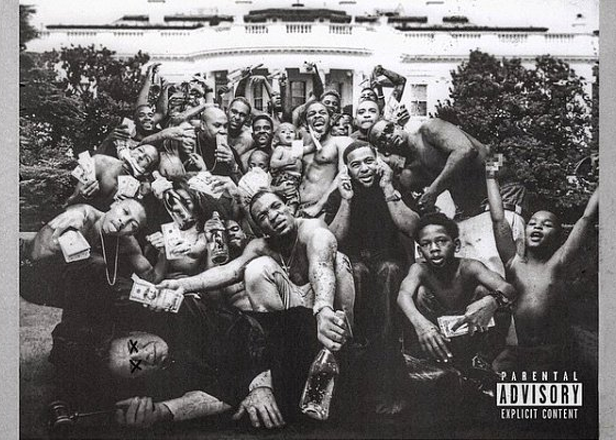

To Pimp a Butterfly is very, very different from Good Kid, but only time will tell if it’s just as good. The first listen inspires optimism.